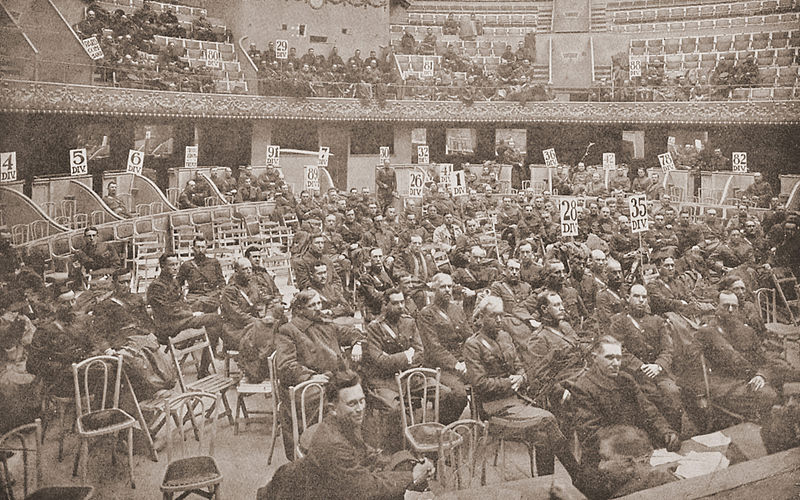
The caucus, like jazz and baseball and the cowboy movie, is an American invention. The term was used in New England in the 18th century to describe a meeting where a small group of people would make decisions about filling political offices before the people were asked to vote. The origin of the term is unclear. In those days it’s likely that it had a negative connotation for most of the people who heard it. Later on, it was associated with “smoke-filled rooms” where party bosses chose candidates and doled out patronage.
Eventually, it took on other, more respectable meanings. It can refer to a group within a legislative body whose members meet to discuss and debate issues and to make plans. In that sense, it can refer to the members of a single party or to any group with similar aims or interests – even one that crosses party lines.
Now the term is used for a set of processes that are part of the presidential nominating system in some states. We use primaries in Connecticut. Ours will be held on April 26th. We’ll go to the polls any time between 6:00 AM and 8:00 PM, vote, and leave. The process is more complicated in caucus states. They go to meetings on the day of the caucus, discuss the candidates, argue their merits, and try to persuade their neighbors to join them. The voting is usually done in public. The process can take several rounds of voting and can last several hours. Supporters of one candidate can switch sides before the results are final. In some cases, that involves a literal switching of sides because voters do it by moving to another part of the room to join another candidate’s supporters.
Critics point out that participating in a caucus can be time-consuming and difficult for voters who have to balance work schedules, travel, and child care. Participation rates in caucus states are often lower than they are in primary states. Supporters of the caucus method call it hands-on, participatory democracy. It forces voters to declare and defend their positions. It increases the likelihood that voters will be informed. Candidates are forced to engage in “retail campaigning” and to engage voters directly.
We don’t have presidential caucuses in Connecticut, but we do have caucuses. Democrats and Republicans choose members of Town Committees at caucuses. Candidates for municipal offices are nominated at caucuses and face the voters in a general election. Candidates for the General Assembly whose districts are contained with the boundaries of a single town are nominated at caucuses. Candidates whose districts cross town lines are nominated at conventions, but the delegates who attend those conventions are chosen in caucuses.
The timing of the caucuses is governed by statute and administered by the Secretary of the State. Legal notices are printed in newspapers to announce the dates, times, and locations.
Join us. It’s hands-on, participatory democracy.
The Ridgefield Democratic Town Committee provides this column.